Waterfalls for All: Breaking Down Barriers of Mobility & Access
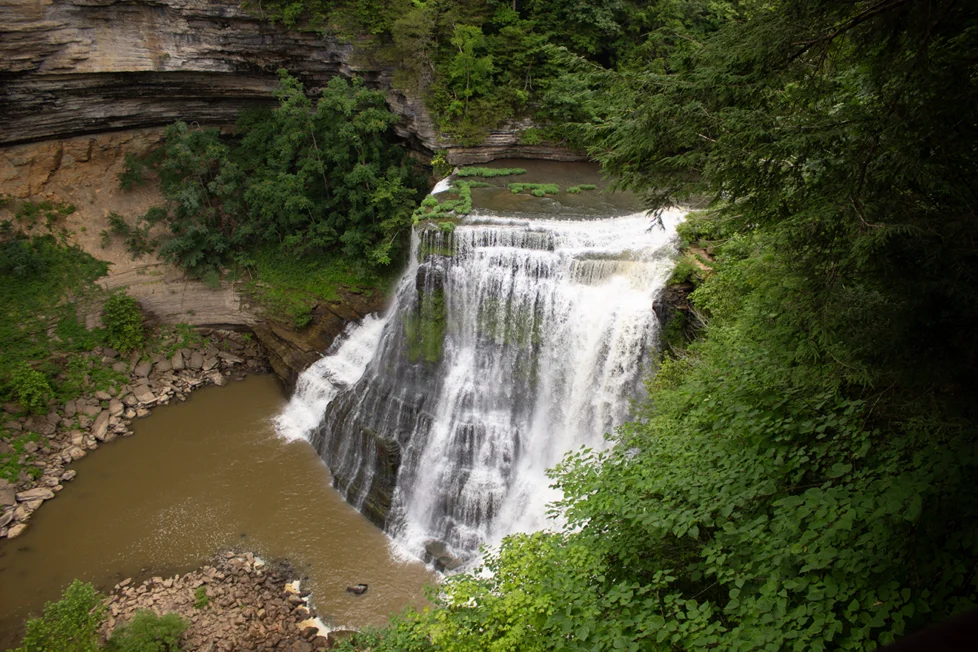

Imagine a place where everyone is included and welcome. A place specially designed so that anyone could experience it regardless of mobility barriers, physical limits, or even those traveling with small children or furry friends. Welcome to ‘Waterfalls for All’ – an initiative built to assist you in creating a visitor experience where no one is ever left behind. Five waterfalls, four Tennessee State Parks, three types of accessibility options, two drivable overlooks, and one region in Middle Tennessee that is quickly becoming the most accessibility-friendly outdoor vacation destination in the state.
Middle Tennessee is well known for its natural beauty with multiple state parks and natural areas featuring majestic waterfalls. But for many visitors—particularly those with mobility challenges with limited access to adaptive equipment—these spectacular natural spaces have felt out of reach in past years. Steep inclines, narrow paths, and a lack of reliable accessibility information have historically created barriers that prevented many from experiencing the joy of a rushing cascade or the peace of a shaded trail.
The Waterfalls for All project is working to change that reality. Developed by the Cookeville-Putnam County Visitors Bureau, Waterfalls for All is a comprehensive, community-supported initiative dedicated to expanding awareness for outdoor accessibility across Tennessee’s Upper Cumberland region. What began as a simple effort to answer a growing number of visitor questions about accessible trail options has evolved into a movement that is reshaping the way Tennesseans—and travelers from across the country—experience our public lands.
At the heart of the project is www.waterfallsforall.com, an online platform featuring detailed accessibility guides for the region’s most visitor-friendly waterfalls. The site equips travelers with practical, up-to-date details on state parks wheelchair compatibility, trail surfaces, distance, accessible parking, paved hiking trails, restroom accessibility, pet-friendly policies, stroller suitability, and EnChroma color-blindness viewing stations. Some locations offer free, rentable all-terrain wheelchairs, opening doors that were once closed to many outdoor lovers.
For Director of Tourism Shan Stout, the inspiration behind the project is deeply personal. “It’s so important to know that everyone can participate when visiting our region,” she explains. “We believe that natural wonders shouldn’t be off-limits to anyone, so we are giving them the information to set their visit up for success regardless of the mobility barriers that they, or their loved ones, might face. My grandfather lost the use of his legs as a teenager, and I know that he missed out on so many things due to his disability. It is my hope that we can help connect visitors with attractions and businesses where everyone can participate.”
Stout’s perspective reflects a growing understanding within Tennessee’s tourism and conservation communities: accessibility is not an amenity—it’s an essential part of inclusive outdoor stewardship. As more families seek safe, welcoming, and accessible outdoor spaces, projects like Waterfalls for All help bridge the gap between aspiration and access. The state of Tennessee is leading the way with accessibility where their state parks are working tirelessly to increase the footprint for accessibility including the addition of more ATV wheelchairs, improved overlooks and the addition of more paved hiking pathways.
The Upper Cumberland region, which boasts some of Tennessee’s most beloved natural destinations—including the waterfalls of Burgess Falls, Cummins Falls, Great Falls, Twin Falls, and Fall Creek Falls— are uniquely positioned to lead the way in accessibility. The project also strengthens the local economy by encouraging businesses to adopt more inclusive practices. Lodging providers, small shops, outfitters, and restaurants have increasingly embraced accessibility upgrades—from wider doorways, ramp installations and adaptive recreation rentals—positioning the Upper Cumberland as a national model for inclusive tourism development. Additional local outdoor recreation opportunities include accessible tennis and pickleball groups.
Inclusivity in outdoor spaces enriches everyone. When Tennessee invests in accessible trails, adaptable equipment, clear information, and welcoming facilities, we ensure that our waterfalls—symbols of the state’s wild spirit and natural resilience—can be safely and joyfully experienced by all.
For more information, visitor insights, and a downloadable waterfall accessibility map, visit waterfallsforall.com