Lafayette, Louisiana: Where Cajun Culture Comes to the Table
There is a moment in Lafayette, Louisiana, when you realize the food is not a show. You're sitting at a table that's been there for 40 years, eating a bowl of étouffée that tastes like it was made by someone's grandmother — because it was — and the room around you is full of people who live here, not people who drove in to experience the culture. That's the distinction that makes Lafayette different from every other food destination in the South.
Lafayette is the largest city in Acadiana, the 22-parish region of south-central Louisiana settled by French-speaking Acadians expelled from Nova Scotia in the 18th century. The Cajun culture that developed here over the following two centuries — the music, the food, the French-inflected English, the particular way of gathering around a table — is one of the most distinct regional cultures in the United States. And it is very much alive.
The Food: What to Eat and Where to Find It
Cajun cooking is not the same as Creole cooking, though the two are often conflated. Creole cuisine developed in New Orleans, drawing on French, Spanish, African, and Caribbean influences. Cajun cooking is rural, simpler in its techniques, and built around what the land and water provided: crawfish, catfish, alligator, wild game, and the vegetables that grow in the Louisiana heat. The holy trinity of Cajun cooking — onion, celery, and bell pepper — appears in nearly every dish, and the roux, cooked low and slow until it reaches the color of dark chocolate, is the foundation of the gumbo that defines the cuisine.
Enjoying this story? Get more like it.
Destination guides, food finds, and hidden gems — delivered weekly.
Prejean's Restaurant on US-167 north of downtown is the institution. Open since 1980, it serves the full canon of Cajun cooking in a dining room with live Cajun music most nights. The crawfish étouffée and the seafood gumbo are the benchmarks. Dwyer's Café on Jefferson Street is the other essential stop — a lunch counter that has been serving plate lunches to Lafayette's working population since 1927. The daily specials rotate, but the red beans and rice on Mondays and the smothered pork chops are the reasons people come back.
The crawfish season runs roughly from late January through June, peaking in March and April. During peak season, the crawfish boil — pounds of mudbugs cooked with corn, potatoes, and enough cayenne to make your eyes water — is the social event of the region. Hawk's Crawfish in Breaux Bridge, about 15 minutes east of Lafayette, is the destination for the full boil experience. Breaux Bridge itself bills itself as the Crawfish Capital of the World and hosts a crawfish festival every May that draws tens of thousands of visitors.
Boudin: The Unofficial State Food
Boudin is the food that separates people who know Louisiana from people who think they do. It's a sausage made from pork, rice, onions, and spices, stuffed into a casing and steamed or smoked. You eat it by squeezing the filling out of the casing directly into your mouth — a technique that takes about 30 seconds to master and that you will use for the rest of your life. Every gas station, grocery store, and butcher shop in Acadiana makes its own version, and the debate over whose is best is a serious local matter.
Don's Specialty Meats in Scott, just west of Lafayette on I-10, is the most frequently cited source for boudin among people who have strong opinions about it. The Boudin Trail, a self-guided tour organized by the Lafayette Convention and Visitors Commission, maps out more than 30 stops across Acadiana. It is one of the better food tourism itineraries in the country — practical, specific, and genuinely useful.
The Music: Cajun and Zydeco
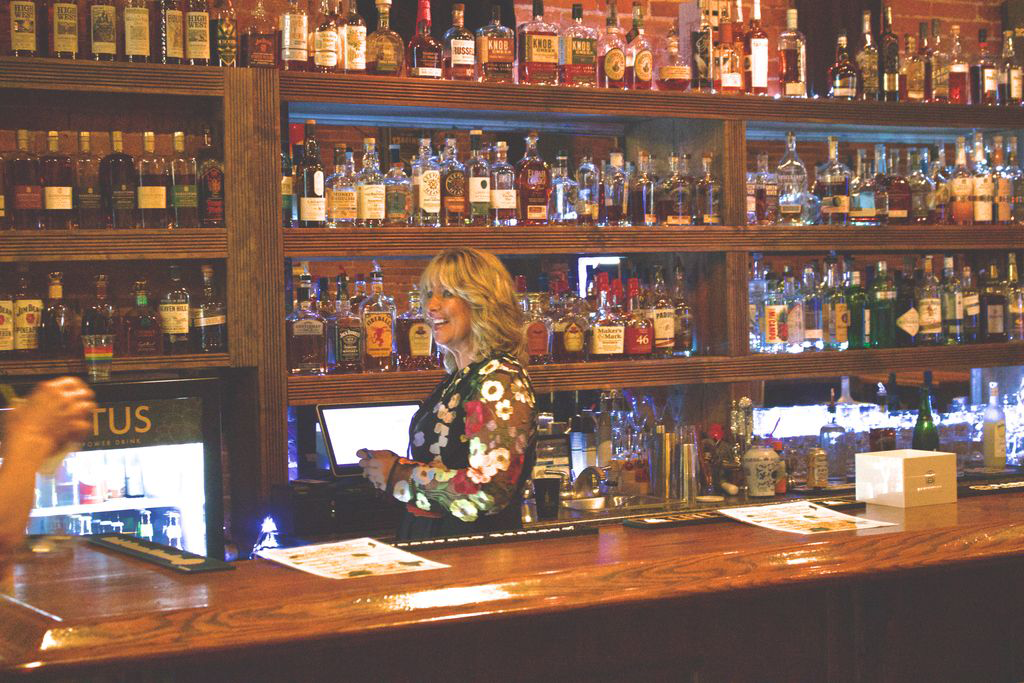
The food and the music in Lafayette are inseparable. Cajun music — accordion, fiddle, and French lyrics — and zydeco, its African-American cousin that adds rhythm and blues to the same instrumentation, are both living traditions here, not museum pieces. The Blue Moon Saloon on Lee Avenue hosts live music most nights of the week, with a back porch that fills up on weekends. Randol's Restaurant and Cajun Dancehall on Kaliste Saloom Road has been combining dinner and dancing since 1983 — the dance floor fills up after 7 p.m. with couples of every age who actually know what they're doing.
The Festival International de Louisiane, held every April in downtown Lafayette, is the largest free outdoor Francophone music festival in North America. The stages run simultaneously across several city blocks, and the lineup draws musicians from Louisiana, France, West Africa, and the French Caribbean. If your travel dates are flexible, planning around Festival International is worth the effort.
Beyond the Table: What Else Lafayette Offers
The Vermilionville Living History Museum and Folklife Park on Surrey Street recreates an 18th- and 19th-century Cajun and Creole village on the banks of Bayou Vermilion. The interpreters are not actors — many are descendants of the families whose history is being told. The cooking demonstrations use period techniques and produce food you can actually eat. It's one of the better living history experiences in the South.
The Acadian Cultural Center, part of the Jean Lafitte National Historical Park and Preserve, tells the story of the Acadian diaspora with a depth and honesty that most regional museums don't attempt. The 40-minute film shown in the theater is a good starting point for understanding why Lafayette is the way it is.
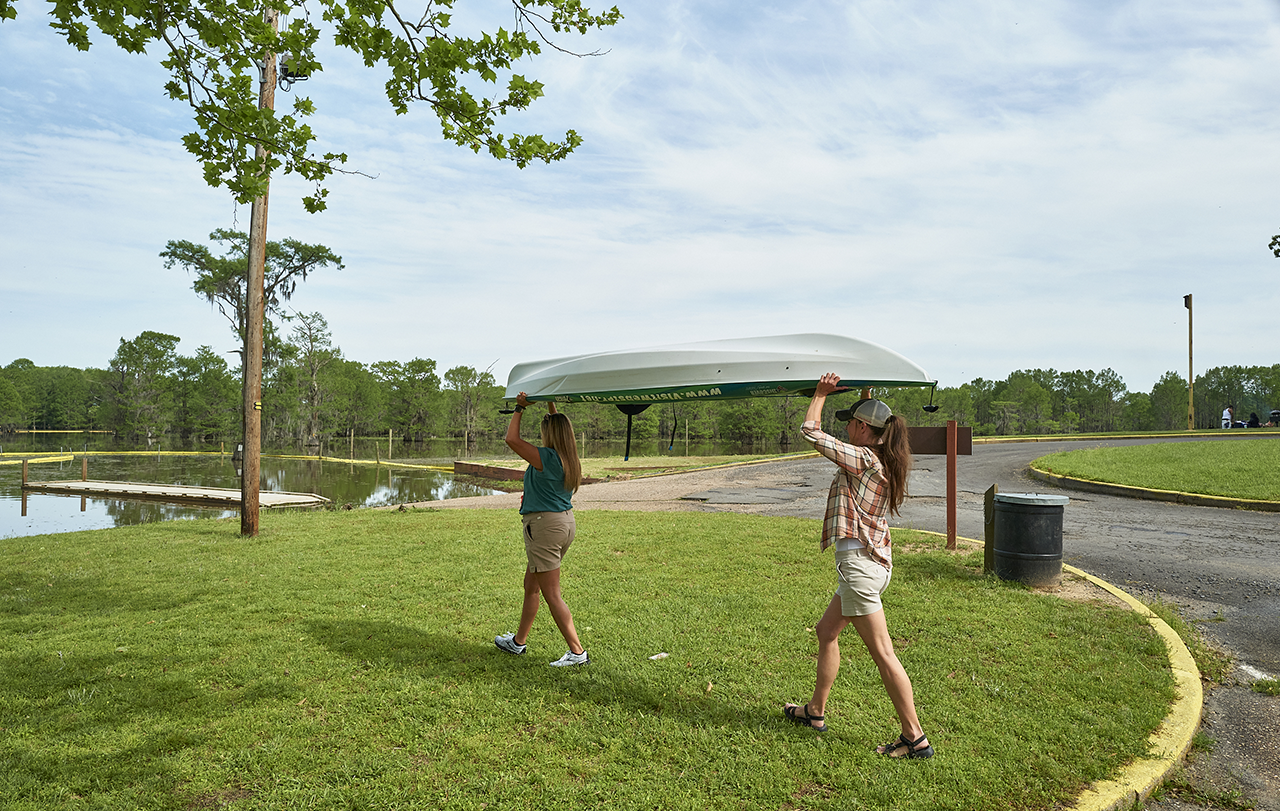
The surrounding Atchafalaya Basin — the largest river swamp in North America — is accessible by boat tour from several launch points near Lafayette. McGee's Atchafalaya Basin Swamp Tours in Henderson, about 20 minutes east, runs morning and afternoon tours through the cypress-and-tupelo swamp. The wildlife — great blue herons, roseate spoonbills, alligators, and in season, thousands of migrating birds — is extraordinary.
Getting to Lafayette and When to Go
Lafayette is served by the Lafayette Regional Airport with connections through Dallas, Houston, and Atlanta. By car, it sits on I-10 about 130 miles west of New Orleans and 200 miles east of Houston. The drive from New Orleans on I-10 passes through the Atchafalaya Basin on the elevated Atchafalaya Basin Bridge — at 18 miles, one of the longest bridges in the United States — and is itself a memorable arrival.
Fall and spring are the most comfortable seasons. Summer is hot and humid in the way that only coastal Louisiana can be, but the food doesn't change and neither does the music. The crawfish season makes late winter through spring the peak food travel window. The Lafayette destination guide covers the full range of what the city offers, and the story of Lafayette as the happiest city in America gives you a sense of the spirit of the place before you arrive.
For a longer Louisiana itinerary, the Natchitoches destination — Louisiana's oldest city, about two hours north — offers a completely different character: a historic brick-street downtown, the Cane River National Heritage Area, and a meat pie that is as essential to north Louisiana as boudin is to the south. And the Jefferson Parish area, just west of New Orleans, bridges the gap between Cajun Country and the Crescent City.
Lafayette doesn't need to perform for you. The food is real, the music is real, and the welcome is genuine. That's a rarer combination than it sounds, and it's exactly why Cajun Country belongs on your travel list.
Explore more culinary travel destinations across the country at Travel, Taste & Tour's Taste section.
Travel, Taste & Tour Newsletter
More stories like this — straight to your inbox
No spam. Unsubscribe any time.